-
Technology
-
Industry
-
Solutions
-
- ASSET MANAGEMENT
- CUSTOMER EXPERIENCE MANAGEMENT
- CYBER SECURITY
- DATA CENTER
- DOCUMENT MANAGEMENT
- ELECTRONIC DATA INTERCHANGE
- ENTERPRISE DATA MANAGEMENT
- ENTERPRISE RESOURCE PLANNING
- ENTERPRISE RISK MANAGEMENT
- ENTERPRISE-GRADE WEB DATA SOLUTIONS
- FACILITY MANAGEMENT
- FIELD SERVICE
- IDENTITY AND ACCESS MANAGEMENT
- INFRASTRUCTURE
- IT SERVICE MANAGEMENT
- MANAGED IT SERVICES
- PAYMENT AND CARD
- PROJECT MANAGEMENT
- SOFTWARE TESTING
- STORAGE
- VIDEO SOLUTIONS
- WORKFLOW
-
-
Platforms
-
Functions
- Leadership Perspectives
- Innovation Insights
- Research
- Magazines
- News
- CXO Awards


Contributory Virtus Investment Partners on the invitation from our Editorial

IT Director at União Química Farmacêutica
Guilhermo FragelliExploring Silicon Valley: My Insights from the Immersion
Guilhermo Fragelli
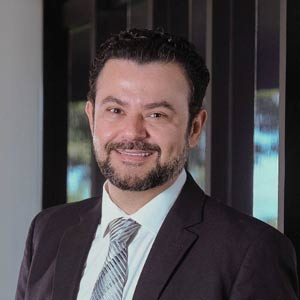
During one week, I had the privilege of diving into the heart of global innovation, Silicon Valley, California. This transformative experience offered me invaluable insights into what makes this ecosystem unique and a global benchmark in technology and innovation.
Silicon Valley is far more than just a geographical area; it's a mindset, a mentality that promotes creativity, collaboration, and the relentless pursuit of excellence. During my stay, I experienced firsthand the key elements that contribute to its success:
Everyone is there! Academy, Accelerators, Investors, and Brilliant Minds: Silicon Valley is a true melting pot of brilliance, where startups, investors, universities, and large companies interact in a highly collaborative ecosystem. The close physical proximity of these players facilitates the exchange of ideas and the formation of innovative partnerships. Imagine a happy hour? You could interact with colleagues from Apple, Google, Meta, OpenAI, and interns from Stanford or Berkeley University, all exchanging ideas, whether at a Starbucks or a happy hour on Santana Row in San Jose. The environment is inherently collaborative!
Highlight for the master class we had from the esteemed professor Naeem Zafar at the University of Berkeley, correlating not only the incredible world of technology and his future perspectives but also shedding light on how the geopolitical and macroeconomic environment impacts technological evolution, as well as demographic analysis around the world (enough material for another article).
 One of the most striking characteristics of Silicon Valley that I observed is its diversity.
Culture of Failure: In the valley, failure isn't stigmatized; it's seen as an inevitable step on the path to success. This was evident in every discussion, from academic settings to Big Techs like AWS and Google. The adage 'making mistakes is part of it, make mistakes quickly and correct them quickly' was a common theme. No one innovates without making mistakes. An example given by the AWS director in relation to Amazon was, ‘Who remembers the Fire Phone?’ According to the executive, the project's failure served as a learning experience for the technical team, which was later moved to the Alexa production, a major success according to him. Also, regarding Jeff Bezos' giant, the concept of '1 or 2-way door' was created to assess risk: if the innovation proposal can be quickly reversed, do not overanalyze it, especially if it doesn't require significant investments. It would be a '2-way door' change, such as altering your homepage color, easily reversible if feedback is negative. In contrast, larger changes like a new distribution center would be a '1-way door,' requiring detailed analysis as reverting is not simple. The vision is to always remain open to new ideas and proposals, with swift and collaborative execution. ... ‘Be collaborative and don't fear failure.’
... The Valley does not thrive on success alone A relatively recent case shows that even the most experienced teams and investors can fail, such as the healthtech Theranos led by Elizabeth Holmes, valued at $9 billion in 2014 and hailed as the ‘new Steve Jobs’ for promising a revolution in health diagnostics. In the end, she was sentenced to 11 years in prison for fraud.
Access to Capital: Silicon Valley draws investors from around the globe, eager to find the next big ideas and unicorns (companies valued at $1 billion). This abundance of venture capital enables promising startups to grow and thrive rapidly, fueling the cycle of innovation. In 2024, according to Forbes, a total of $34.7 billion was raised by the 50 AI startups with the highest market values, led by OpenAI with a $10 billion contribution from Microsoft.
Focus on Global Impact: Unlike many regional ecosystems, Silicon Valley has had a global vision from the start. Companies here aim not just to dominate the local market but to create products and services with potential for global impact. During the immersion, we visited the Plug and Play accelerator, which has accelerated companies like PayPal, Uber, and Logitech. What we heard was ‘Think big.’ Startups in the valley consistently aim to build solutions with global expansion in mind.
Diversity to Innovate: One of the most striking characteristics of Silicon Valley that I observed is its diversity. It was clear that cultural richness and a variety of perspectives are essential for innovation. We heard from both Google and AWS about the importance of the Valley's diversity. If we are thinking about innovations with global impact, it is only natural to have representatives from all over the world, various ethnicities, and sexual identities. The Valley attracts talent from across the globe, creating an environment where different experiences and ideas meet and merge.
It was an incredible experience! I highly recommend it to everyone. Seeing how innovative an ecosystem can be, with the combination of mindset, tolerance for failure, big thinking, and a sense of collaboration, was truly inspiring. It would be a mistake to try to replicate the Valley's ecosystem in other centers. We should be inspired and bring the power of transformation to our environments. The cultural context we are part of must be considered. In my opinion, the diversity and creativity of the Brazilian people and our welcoming nature, which translates into collaboration and teamwork, give us great advantages in being leaders in innovation, whether in our ventures or in the environments where we operate, be it universities, communities, or companies.
Finally, my thanks to the Assespro-RJ team, especially Robert Janssen, who shared incredible insights and did extremely relevant work for the technological development of our country.
The articles from these contributors are based on their personal expertise and viewpoints, and do not necessarily reflect the opinions of their employers or affiliated organizations.
EDITOR'S Choice

Fortune Brands Innovations [NYSE: FBIN]
By Juan Guerrero, Director, IT Audit & Data Analytics
The IT Audit Evolution: From Compliance to Strategic Intelligence
Broad River Retail
Wes Dudley, Senior Vice President, Customer Experience
Customer Experience in the Age of Amplified Complexity
Fortune Brands Innovations [NYSE: FBIN]
Scott Barnes, Sr. Director of Enterprise Cyber Security (CISO)
The X-Factor in Cybersecurity: AI and Automation at Work

LHarris Technologies [NYSE: LHX]
Brian Allred, Director of Business Intelligence and Analytics
The Shift from Rigid Dashboards to Conversational Analytics
Ivar's Restaurants
Patrick Yearout, Director of Innovation, Recruitment & Training
From Hiring to Development: Nurturing Teams that CareLatest Issues