-
Technology
-
Industry
-
Solutions
-
- ASSET MANAGEMENT
- CUSTOMER EXPERIENCE MANAGEMENT
- CYBER SECURITY
- DATA CENTER
- DOCUMENT MANAGEMENT
- ELECTRONIC DATA INTERCHANGE
- ENTERPRISE DATA MANAGEMENT
- ENTERPRISE RESOURCE PLANNING
- ENTERPRISE RISK MANAGEMENT
- ENTERPRISE-GRADE WEB DATA SOLUTIONS
- FACILITY MANAGEMENT
- FIELD SERVICE
- IDENTITY AND ACCESS MANAGEMENT
- INFRASTRUCTURE
- IT SERVICE MANAGEMENT
- MANAGED IT SERVICES
- PAYMENT AND CARD
- PROJECT MANAGEMENT
- SOFTWARE TESTING
- STORAGE
- VIDEO SOLUTIONS
- WORKFLOW
-
-
Platforms
-
Functions
- Leadership Perspectives
- Innovation Insights
- Research
- Magazines
- News
- CXO Awards


Contributory Virtus Investment Partners on the invitation from our Editorial

Nordestão Supermarket
Yan Gomes, Executive ITFrom Street Vendor to IT Executive: A Journey of Resilience
Yan Gomes, Executive IT
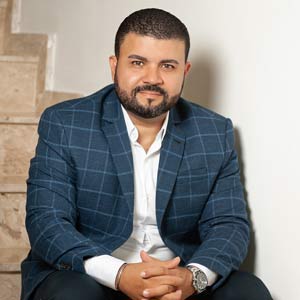
There's a popular saying that circumstances can shape one's situation, and indeed, that's how my professional life began. I grew up in a neighborhood plagued by crime and drugs, attending public schools where I faced bullying from classmates. Raised by a single mother who worked as a street vendor, my sole focus during that period was on how I could progress and change my life's circumstances. So, I began by selling fruits, timid, frightened, insecure, and inexperienced, setting up my stand in front of a bakery.
Despite the pervasive negativity surrounding me, I learned the meaning of a word that would only fully resonate with me in the corporate world: resilience. It's easy for someone with a college degree, an MBA, language proficiency, or specialized training to echo this word within a corporate setting, whether through speeches or PowerPoint presentations. Yet, in those early days, there was no money in the cash register, no expertise with the product, no training, no suppliers. What I did have was a goal—I knew what I wanted, even if I didn't yet know where it would lead me.
Throughout my professional journey, I encountered many individuals who gave up, not just changing fields but abandoning their pursuits altogether—professionals who were far more capable and prepared than I was but ended up stuck along the way, many of whom are now disillusioned.
In those early days, all I had was a singular focus on my goal and the desire to move forward. So, I built relationships, sought advice, and developed a behavioral and analytical understanding of people. I secured a job selling home appliances, and within two months, I was the top-performing salesperson. As a fruit vendor, I learned yet another word: ‘objective.’ Through practice, I began to lay down my stepping stones, and within six months, I left a stable job to embark on my career in IT as an intern at HP (Hewlett Packard), assigned to a two-month project that would soon leave me unemployed.
Drawing from my experience as a fruit vendor, I put another word into action: ‘overcoming.’ There was little theory, but I was determined not to backtrack. I noticed an opportunity no one else saw, and soon, the most senior professional recognized my desire to overcome my technical limitations and became my mentor.
Despite some doubting and others discouraging me, I overcame my technical limitations, filling in for that senior professional during vacations and eventually becoming the technical leader for the main clients in Pernambuco, Brazil. This led to tangible results, including the initiation of the first project to reduce the capex of the company's major clients.
 ‘I am certain that an IT executive is forged over years of professional experience, much like fire forges steel.’
Next, I faced my greatest challenge: overseeing migration, support, satellite systems, expansion, and innovation projects for the largest client, with a rapidly expanding network of 36 branches and revenues exceeding billions. This required putting into practice the importance of ‘relationships,’ something I never thought would be fundamental to my professional advancement.
We had projects ranging from SAP ECC implementation to Microsoft systems, automation, WMS, connectivity, infrastructure, backup, system customizations, data center assembly, various legacy systems, and projects for clients of the world's largest logistics, transportation, and storage company. I realized the importance of building relationships with the right people and technical and skilled suppliers, being part of a team, and fostering trust with senior management, along with my availability at any time of day or night.
I received four promotions, acquired new technical skills, and developed management and leadership profiles during this period. Thanks to my good relationships, my IT team delivered projects on time, with professionals working overnight to find solutions and correct issues impacting the business directly. We completed all projects within the deadline, earning recognition from the board of directors and clients numerous times.
During this phase, a word I learned as a fruit vendor came to the forefront: ‘renunciation.’ It was truly a risky decision to downgrade from a management role to an analyst role, but I would be working for the world's largest aluminum can and lid manufacturing company despite the salary reduction. At that time, I became aware of where I wanted to go.
I started as a junior analyst, progressed to senior, and soon assumed the position of managing a multidisciplinary IT team, leading LATAM projects, possessing advanced knowledge of various IT frameworks, working with major technology and automation vendors, contributing to Lean and Agile certifications, process improvements, team training, and implementing leading ERP systems in a Microsoft and Cisco environment.
The reward was a recognition circular and a financial prize for my relevant contributions to IT business success. During this time of professional challenges and personal challenges at home, with my daughter suffering from bulimia and anorexia, I truly lived out the word ‘renunciation’ and in the end, everything turned out well.
Opportunities continued to grow, with me taking on project management roles distributed geographically across Brazil. It now encompassed 54 airports with a team of 110 people, a massive undertaking. During this period, I put another word from my fruit vendor days into practice: ‘team.’ It was when I began using it in my team meetings, "I don't work with heroes trying to solve everything alone; it only works in movies."
I was aware of my challenges, having developed technical skills, knowing the frameworks, and possessing successful cases. However, I had yet to put a manager profile into practice—someone who is a friend, counselor, cooperator, and promoter of technical and behavioral capabilities, facilitating the growth of individuals. All of this was necessary to make the team work together, generate results, and move from being a manager to being a leader.
Looking back, I see the beginnings that propelled me to take on great challenges, managing large budgets and projects with both small and large budgets. Putting into practice experiences and learnings, there were times when I had to exercise discretion, presenting results instead of just talking about them and defending my views and convictions when underestimated.
I contributed to the expansion and modernization of major retail companies, providing guidance and digital transformation. I built relationships with suppliers supporting projects I was piloting, technical and budgetary incentives, and the desire of professionals to work alongside me with loyalty to my management.
I have worked in three different states in Brazil, accepting regional and national challenges, always sowing results and friendships, sharing life and professional lessons, and mainly making disciples. Despite having higher education, a postgraduate degree, 10 certifications, and a specialization in IT, with a presence in various boardrooms and many instances of managing incidents, changes, projects, multidisciplinary teams, recognitions, and awards, I can say that an executive needs strong foundations forged over a lifetime.
I am certain that an IT executive is forged over years of professional experience, much like fire forges steel. Projects, people, decisions, actions, convictions, positions, choices, renunciations, and other factors will prepare this professional to overcome all obstacles but, above all, never neglect empathy and cooperation.
But I will never forget the lessons I learned as a fruit vendor, many of which I have applied throughout these 20 years of my professional journey, and I can guarantee that they are still pillars that sustain me.
The articles from these contributors are based on their personal expertise and viewpoints, and do not necessarily reflect the opinions of their employers or affiliated organizations.
EDITOR'S Choice

Fortune Brands Innovations [NYSE: FBIN]
By Juan Guerrero, Director, IT Audit & Data Analytics
The IT Audit Evolution: From Compliance to Strategic Intelligence
Broad River Retail
Wes Dudley, Senior Vice President, Customer Experience
Customer Experience in the Age of Amplified Complexity
Fortune Brands Innovations [NYSE: FBIN]
Scott Barnes, Sr. Director of Enterprise Cyber Security (CISO)
The X-Factor in Cybersecurity: AI and Automation at Work

LHarris Technologies [NYSE: LHX]
Brian Allred, Director of Business Intelligence and Analytics
The Shift from Rigid Dashboards to Conversational Analytics
Ivar's Restaurants
Patrick Yearout, Director of Innovation, Recruitment & Training
From Hiring to Development: Nurturing Teams that CareLatest Issues