-
Technology
-
Industry
-
Solutions
-
- ASSET MANAGEMENT
- CUSTOMER EXPERIENCE MANAGEMENT
- CYBER SECURITY
- DATA CENTER
- DOCUMENT MANAGEMENT
- ELECTRONIC DATA INTERCHANGE
- ENTERPRISE DATA MANAGEMENT
- ENTERPRISE RESOURCE PLANNING
- ENTERPRISE RISK MANAGEMENT
- ENTERPRISE-GRADE WEB DATA SOLUTIONS
- FACILITY MANAGEMENT
- FIELD SERVICE
- IDENTITY AND ACCESS MANAGEMENT
- INFRASTRUCTURE
- IT SERVICE MANAGEMENT
- MANAGED IT SERVICES
- PAYMENT AND CARD
- PROJECT MANAGEMENT
- SOFTWARE TESTING
- STORAGE
- VIDEO SOLUTIONS
- WORKFLOW
-
-
Platforms
-
Functions
- Leadership Perspectives
- Innovation Insights
- Research
- Magazines
- News
- CXO Awards









Contributory Virtus Investment Partners on the invitation from our Editorial

LPL Financial
Guilhermo Fragelli, Plant Manager, Union Agener, Inc and Victor Fetter, CIO and Managing Director, LPL FinancialLeading Across Cultures and Beyond Technology
Guilhermo Fragelli, Plant Manager, Union Agener, Inc and Victor Fetter, CIO and Managing Director, LPL Financial
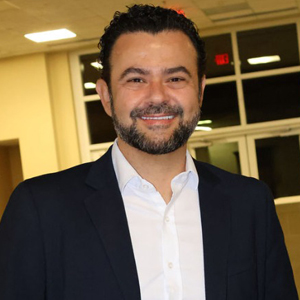
Stepping into the role of plant manager in the United States after years in technology leadership was both unexpected and transformative. While the performance indicators, dashboards and operational targets looked familiar, one reality quickly became clear: culture changes everything. Metrics may be universal, but results ultimately come from people, and leading people across cultures requires a very different approach.
This career move was not a long-term goal. It emerged as an opportunity at a moment when my background in business leadership, mergers and acquisitions, process transformation and technology aligned with the needs of the organization. Having previously supported the transition phase of the operation years earlier, I already understood the environment, the people, and the challenges. When the opportunity arose, I was ready—not because I had planned it, but because my experiences had prepared me.
One of the most significant shifts came from navigating cultural differences between Brazilian and American professional environments. Both cultures are made up of hardworking professionals, but they operate differently. Brazilian teams tend to be highly adaptable, used to rapidly changing direction in response to uncertainty. American teams, on the other hand, thrive in more stable, predictable environments where long-term planning and consistency are valued.
Neither approach is superior. In fact, the combination of both creates an exceptionally rich environment. Leading a multicultural team requires balance, knowing when to accelerate and when to slow down. Often, leadership becomes a healthy dialogue: one side pushing for speed, the other for caution. The goal is not extremes, but sustainable progress. In the end, success still depends on people, processes and the business working in harmony.
My background in technology proved surprisingly helpful in this strategic role. A CIO’s mindset is inherently end-to-end. It trains you to see systems, identify bottlenecks and use data structured or not to guide decisions. That perspective translates well into operations, especially in highly automated environments.
Today, I lead a biotechnology plant that operates with a level of automation few facilities globally can match. Thousands of sensors, real-time monitoring, control rooms operating 24/7, and a digital twin connected to administrative systems create an environment where decisions are deeply data-driven. Artificial intelligence supports everything from market analysis to internal performance insights. Yet, even in such a technologically advanced operation, leadership remains fundamentally human.
 A CIO’s mindset is inherently end-to-end as it trains you to see systems, identify bottlenecks and use data to guide decisions. That perspective translates well into operations.
Thinking like a CIO outside of IT means practicing ambidextrous leadership. On one side, there is the constant pressure to maintain operational excellence in the form of availability, safety, cost and quality. On the other, there is innovation. In operations, unlike in IT, innovation cannot always move fast. Investments often require millions of dollars and years before results materialize. Decisions made today can define success or failure years down the road.
This reality reshaped my understanding of prioritization. Strategic alignment and financial impact remain critical, but they are not enough. Factors such as asset obsolescence, workforce knowledge retention, competitiveness as an employer, community perception and relationships with public institutions all play a role. Operational leadership forces a broader, more holistic view of the business ecosystem.
Another lesson being in operations taught me, one that IT alone could not, was the importance of execution rhythm. Early on, I focused heavily on structuring processes to gain clarity. While processes are essential, they must never become barriers to delivery. The ultimate responsibility of operations is simple and unforgiving: deliver the product safely, on time, within cost and with quality. Processes should guide, not constrain.
The boundary between technology and operations is increasingly irrelevant. What matters is responsibility, not silos. When leaders deeply understand both business and technology, sustainable results become far more likely. Transformation is no longer digital, it is cultural.
Many organizations still underestimate this. In highly competitive labor markets, especially in the United States, leadership quality can define organizational success. Employees need to feel valued, aligned with strategy, and supported in maintaining a healthy balance between work and life. Culture is not a soft topic, but a decisive one.
For technology leaders considering broader roles, my advice is simple: create space to deeply understand the operation. Go beyond your functional boundaries. Think like a COO, a CRO, even a CEO. You do not need to know everything, but you must understand how decisions are made across the organization.
Ultimately, great operational leaders share common traits regardless of background: strong business acumen, market awareness, the ability to inspire people with purpose, disciplined risk analysis and a constant hunger for data and learning. Technology is not the goal. It is the enabler.
If I had to summarize my journey in one lesson, it would be this: progress matters more than perfection. No organization, operation or individual is flawless. What defines success is the commitment to evolve. Looking in the rearview mirror, a red indicator is not the problem, but staying there without a plan is. Growth comes from honest analysis, deliberate action and the optimism to believe improvement is always possible.
The articles from these contributors are based on their personal expertise and viewpoints, and do not necessarily reflect the opinions of their employers or affiliated organizations.
EDITOR'S Choice

Fortune Brands Innovations [NYSE: FBIN]
By Juan Guerrero, Director, IT Audit & Data Analytics
The IT Audit Evolution: From Compliance to Strategic Intelligence
Broad River Retail
Wes Dudley, Senior Vice President, Customer Experience
Customer Experience in the Age of Amplified Complexity
Fortune Brands Innovations [NYSE: FBIN]
Scott Barnes, Sr. Director of Enterprise Cyber Security (CISO)
The X-Factor in Cybersecurity: AI and Automation at Work

LHarris Technologies [NYSE: LHX]
Brian Allred, Director of Business Intelligence and Analytics
The Shift from Rigid Dashboards to Conversational Analytics
Ivar's Restaurants
Patrick Yearout, Director of Innovation, Recruitment & Training
From Hiring to Development: Nurturing Teams that Care


