- Technology
- Industry
- Solutions
-
- ASSET MANAGEMENT
- CUSTOMER EXPERIENCE MANAGEMENT
- CYBER SECURITY
- DATA CENTER
- DOCUMENT MANAGEMENT
- ELECTRONIC DATA INTERCHANGE
- ENTERPRISE DATA MANAGEMENT
- ENTERPRISE RESOURCE PLANNING
- ENTERPRISE RISK MANAGEMENT
- ENTERPRISE-GRADE WEB DATA SOLUTIONS
- FACILITY MANAGEMENT
- FIELD SERVICE
- IDENTITY AND ACCESS MANAGEMENT
- INFRASTRUCTURE
- IT SERVICE MANAGEMENT
- MANAGED IT SERVICES
- PAYMENT AND CARD
- PROJECT MANAGEMENT
- SOFTWARE TESTING
- STORAGE
- VIDEO SOLUTIONS
- WORKFLOW
-
- Platforms
- Functions
- Leadership Perspectives
- Innovation Insights
- Research
- Magazines
- News
- CXO Awards


Contributory Virtus Investment Partners on the invitation from our Editorial

Phone LCD Parts
Fatih Can, Head of ITLeading IT through Rapid B2B Growth
Fatih Can, Head of IT
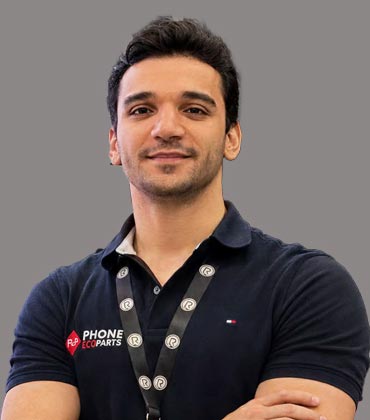
Fatih Can
Fatih Can holds a bachelor's degree in Electrical and Electronic Engineering and a Master's in Business Analytics, combining technical depth with a data-driven view of operations.
When Business Growth Exposes Operational Weaknesses
Rapid growth rarely breaks a company in one place. It breaks the seams between departments. At Phone LCD Parts, a B2B supplier of replacement parts to repair shops, rising website traffic and disruption at several competitors sent a wave of new customers our way. Shipping and operations scaled quickly, and every process that had worked at the old volume began to show its limits.
The additional volume did not create new problems as much as amplify existing ones. Operational mistakes increased, manual tasks demanded more headcount, and every error generated follow-up work for customer service. A single picking mistake could mean a reshipment for the warehouse, a call for the support team, and lost time for a customer whose own business depended on that part arriving correctly.
That chain reaction became the lens for every IT decision we made: where does one failure create work in three places, and how do we remove it at the source?
Outgrowing the Foundations We Started With
Every company starts small, and its systems are built for the scale it has at the time. Ours were no exception. The infrastructure behind our website had served us well, but it was never designed for the volume and expectations that rapid growth brought. Today's B2B buyers expect the same speed and ease they get from the best consumer platforms and a supplier that falls short becomes friction in their working day.
The website became our most immediate priority. We rebuilt our server environment and site architecture to meet what modern customers expect rather than what had been sufficient when we were smaller. The result was a faster, more reliable experience that put us ahead of competitors on performance and gave new customers a reason to stay and return.
 In a growing company, technical decisions ripple across the business. Collaboration is not a soft skill alongside technical competence; it is part of it.

Building from the Operational Floor
The same principle shaped our approach to operations. Rather than designing solutions from requirements documents, we built them through direct observation. We answered incoming customer calls ourselves and turned feedback into actionable work items. We also spent time on the operational floor, watching manual tasks and tracing where mistakes originated.
From there, the priority was to remove unnecessary effort before automating anything. The goal was to bring the opportunity for error as close to zero as possible, not simply digitize a flawed process. Mobile applications put tools in workers’ hands, moving workflows onto devices they could use at the point of work. After release, we tested each solution in daily use and refined it based on feedback from the people using it.
Hiring for Collaboration, Not Just Code
IT grew alongside the departments it supported. As demands on people, projects and resources increased, we hired for two qualities in equal measure: technical ability and the willingness to work closely with others. We needed engineers who could understand an operational problem in its own terms, accept feedback from non-technical colleagues, and keep improving a solution after it went live.
In a growing company, technical decisions ripple across the business. Collaboration is not a soft skill alongside technical competence; it is part of it.
Looking back, our IT team functioned much like the AI systems now reshaping the industry. We gathered signals from customer conversations, floor observations and system behavior. We stored them in a working library of experience, revisited what we had learned and used those connections to make better decisions. Establishing reliable data flows between processes and departments allowed our systems to improve day by day.
The parallel matters because the competitive advantage is the same in both cases: not the volume of information, but how effectively it is processed and turned into useful improvement.
Keeping Customers Competitors Lost
B2B raises the stakes. Our customers visit our site constantly, depend on our service to run their own shops, and expect more as the relationship matures. We competed against companies with established reputations and experienced teams. Their missteps opened the door for us, but only the quality and consistency of our own service could keep those customers.
IT leadership in a fast-growing business is less about any single system than about connecting three things: what customers expect, what operations knows, and what technology can do. The better IT understands those relationships, the more capacity the company gains from every lesson it learns, and the more sustainable its growth becomes.
The articles from these contributors are based on their personal expertise and viewpoints, and do not necessarily reflect the opinions of their employers or affiliated organizations.
EDITOR'S Choice

Fortune Brands Innovations [NYSE: FBIN]
By Juan Guerrero, Director, IT Audit & Data Analytics
The IT Audit Evolution: From Compliance to Strategic Intelligence
Broad River Retail
Wes Dudley, Senior Vice President, Customer Experience
Customer Experience in the Age of Amplified Complexity
Fortune Brands Innovations [NYSE: FBIN]
Scott Barnes, Sr. Director of Enterprise Cyber Security (CISO)
The X-Factor in Cybersecurity: AI and Automation at Work

LHarris Technologies [NYSE: LHX]
Brian Allred, Director of Business Intelligence and Analytics
The Shift from Rigid Dashboards to Conversational Analytics
Ivar's Restaurants
Patrick Yearout, Director of Innovation, Recruitment & Training
From Hiring to Development: Nurturing Teams that Care


