-
Technology
-
Industry
-
Solutions
-
- ASSET MANAGEMENT
- CUSTOMER EXPERIENCE MANAGEMENT
- CYBER SECURITY
- DATA CENTER
- DOCUMENT MANAGEMENT
- ELECTRONIC DATA INTERCHANGE
- ENTERPRISE DATA MANAGEMENT
- ENTERPRISE RESOURCE PLANNING
- ENTERPRISE RISK MANAGEMENT
- ENTERPRISE-GRADE WEB DATA SOLUTIONS
- FACILITY MANAGEMENT
- FIELD SERVICE
- IDENTITY AND ACCESS MANAGEMENT
- INFRASTRUCTURE
- IT SERVICE MANAGEMENT
- MANAGED IT SERVICES
- PAYMENT AND CARD
- PROJECT MANAGEMENT
- SOFTWARE TESTING
- STORAGE
- VIDEO SOLUTIONS
- WORKFLOW
-
-
Platforms
-
Functions
- Leadership Perspectives
- Innovation Insights
- Research
- Magazines
- News
- CXO Awards



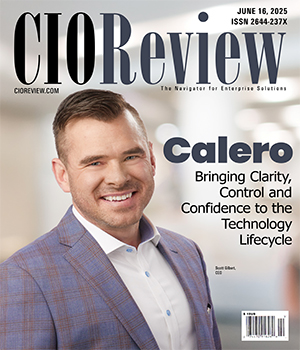
Technology is the backbone of every enterprise’s daily operations. From collaboration platforms to cloud infrastructure, it powers productivity at every level. But with that power comes an often-overlooked challenge of managing the sheer sprawl of digital assets. Every new site, hire or policy shift introduces another layer to an already complex environment. Mobile devices need provisioning. SaaS licenses demand constant rightsizing. Telecom contracts require oversight. Through it all, IT teams are expected to support transformation while delivering innovation and security— often without the structure or visibility to do so efficiently. This is the environment Calero was built for. Across sectors—from banking and healthcare to logistics and professional services—Calero is transforming how businesses govern their technology ecosystems. Its platform provides something that many organizations have long sought but struggled to implement; a way to simplify operations, reduce management costs and maintain full visibility across telecom, mobility and SaaS lifecycles, all without slowing down day-to-day execution. In most companies, lifecycle inefficiencies quietly appear, such as untracked licenses, redundant services, outdated contracts or delayed device provisioning. Over time, they become systemic—eroding budgets, increasing audit risk and frustrating employees. Calero addresses these gaps with a centralized platform that manages everything, from procurement to payment. But the solution’s power extends to how it seamlessly integrates into each client’s operations. Adapting to fit existing workflows, it automates high-friction processes and gives stakeholders—from IT to finance—real-time access to actionable insights. For new hires within an organization, it means having the tools they need from day one. For finance teams, it brings a clear audit trail and tighter cost control. And for CIOs, it frees up bandwidth to focus on growth rather than reactive troubleshooting. “Our philosophy is simple,” says Scott Gilbert, CEO. “Businesses shouldn’t have to choose between scale and control. Our platform is designed to deliver both. We manage hundreds of billions in transaction volume and hundreds of thousands of service orders annually—and we do it with clarity.” Clients gain software that optimizes operational fluency. With that fluency comes faster provisioning, stronger compliance and better support for those who rely on technology to do their jobs. This structure is particularly critical now as enterprises continue to navigate hybrid work models and shifting team structures, with tighter IT budgets. Calero’s platform is proving indispensable—for managing complexity and giving companies the agility to confidently move through it. One Platform, Total Control Built on three key pillars—inventory, invoices and contracts—the platform provides visibility, control and optimization across the entire IT expense lifecycle. But what truly sets Calero apart is what happens next. The platform taps directly into the IT ecosystem, capturing real-time usage from voice conversations, PBX systems and collaboration tools. It draws live insights from firewalls and access controls to monitor SaaS consumption, while switches and routers provide a pulse on network activity. Every layer of this data is automatically analyzed and tied back to actual spend across telecom, cloud and SaaS environments. This level of clarity turns passive tracking into active optimization, enabling smarter decisions across the entire IT expense lifecycle. Managing IT expenses requires more than just visibility. Calero integrates carrier accounts, SaaS applications, mobility services, human resource information systems and financial records to create an accurate, structured view of a company’s technology landscape. A strong data foundation ensures that automation can drive meaningful results rather than simply processing what’s already in place. Workflow automation brings structure to the entire lifecycle. Invoice processing, for example, becomes a flawless process. The system ingests invoices, structures the data and automatically assigns costs to the correct departments. Audits validate each charge against contract terms and inventory records, flagging discrepancies before they become unnecessary expenses. Inventory management also plays a critical role. Every service, device and contract is continuously updated to reflect a company’s technology footprint. If an invoice includes a mobile number linked to a former employee, Calero identifies the issue immediately. The same approach applies to contracts, where rates and expiration dates are tracked and enforced to keep vendor agreements in check. By combining deep data intelligence, automation and structured workflows, Calero helps businesses eliminate inefficiencies, control costs and simplify technology lifecycle management—transforming IT expense management from an ongoing challenge to a well-orchestrated system. For many organizations, gaining this level of control starts with fixing the basics. Some operate in a Greenfield environment, meaning they have no structured system for IT expense management. Departments handle purchases ad hoc, tracking expenses through spreadsheets and informal communication. Such was the case for a global healthcare product company, which struggled to manage its telecom expenses using spreadsheets and internal resources. Without a clear view of its spending, it suspected overpayments but had no concrete data to prove it. An external audit confirmed its worst fears—it had exceeded their telecom budget by 130 percent, amounting to millions in overspend. Within 60 days, Calero identified $500,000 in savings by optimizing contracts and eliminating unused devices. Over the next six to nine months, it uncovered an additional $7.2 million in cost reductions and also delivered an extra 20 percent in savings beyond their initial expectations. “Financial control is just the first step. To optimize IT management, businesses must also eliminate inefficiencies that disrupt operations and frustrate employees,” says Gilbert.
Digital Magazine
Top Software Digital Transformation Solutions 2025
Digital transformation is taking a new form with the explosive growth of Gen AI. Enterprises aiming to stay ahead of the market are actively seeking solutions to establish a strong data foundation to augment governance, management and innovation in their operations. NucleusTeq, a global leader in data transformation, software services and solutions, is at the forefront of enabling this, helping numerous Fortune 1000 companies build an enterprise-wide data fabric across their business applications, data storage and security requirements. NucleusTeq’s unified data modernization and management platform, NuoData, swiftly bridges the AI adoption gap, helping enterprises move from AI experimentation to full-scale production grade applications. Clients are rapidly building ‘Trusted AI’ applications utilizing strong data foundation and engineering capabilities. The ability to rapidly integrate and analyze data allows businesses to move beyond AI pilots into full-scale implementation. “For us, digital transformation means performing operations better, faster and cheaper while ensuring 100 percent compliance. We achieve up to 10 times faster time-to-market than our competitors,” says Ashish Baghel, founder and CEO. “Clients are no longer caught in fragmented data landscapes, governance hurdles and legacy infrastructure.” Future-Proofing Enterprises with AI-Driven Agility Enterprises often grapple with fragmented digital transformation efforts due to point solutions that require excessive integration time. NucleusTeq & NuoData overcomes this challenge by consolidating data cataloging, lineage tracking, data engineering, orchestration, governance, analytics (Gen AI & machine learning), security and observability into a cohesive ecosystem. Its horizontal, industry-agnostic operation model allows the delivery of these offerings to a wide range of industries, including energy, high-tech, manufacturing, banking, payments, retail and utilities. This allows the company to leverage expertise across different sectors and adapt to changing needs without being tied to any specific industry. NucleusTeq has built solutions that are intelligent by design, ensuring that businesses harness the full potential of AI rather than being locked to a single cloud provider. The company prioritizes understanding clients’ distinct strategies and then builds a cloudindependent solution tailored to their needs. This approach allows clients to scale and operate seamlessly across multiple cloud environments or on-premise infrastructures, leading to flexibility, cost optimization and resilience in their digital journeys. Organizations can now process and manage data up to 60 times faster, significantly reducing project timelines—often within 20 to 30 percent of the standard timeframe. The No-Code Advantage Complementing these benefits are the platform’s no-code and low-code functionalities that reduce the learning curve and accelerate time-to-value for clients. This also makes AI and data transformation accessible to an array of users. Whether it’s the initiation of an AI journey or enhancing existing capabilities, NuoData helps them build, integrate and scale models without the need to hire multiple technicians or programmers. In many cases, clients experience a reduction in operational costs by 50 percent.

Top Cannabis Management Software 2025

Legal cannabis is having a moment. Laws are changing, demand is growing and governments are searching for ways to control the chaos. But the truth is that legalization doesn’t mean much if the systems behind it don’t work. Access stalls, compliance becomes a burden, and the black market wins again. Kanha Technology exists to halt that cycle. The company builds national infrastructure for cannabis programs that are integrated, trackable and scalable from seed to sale. Its platform gives governments a way to oversee cultivation, production, distribution and access without adding red tape, allowing operators to function legally without being crushed by costs or complexity. Kanha isn’t another compliance tool bolted onto a broken system. Its ERP ecosystem replaces fragmented processes with a single interface where ministries can issue licenses, inspect facilities, validate prescriptions and approve medical cards or tourist cannabis passes—all in real time. Governments license the platform through renewable five-year SaaS contracts, with fixed pricing designed to scale without financial strain. At the helm is Orland Yee, a systems architect who once helped track the heat shield on space shuttles and designed software infrastructure for some of the largest energy, transportation and insurance companies. He was among a handful of principal software architects entrusted with building mission-critical systems for Microsoft that could not fail. Now, he’s channeling that same precision into one of the most fragmented markets on earth. “We designed the system around the people who use it,” says Yee. “It’s about powering the global expansion of legal cannabis through technology that’s robust, intuitive and built to scale.” Everything in Kanha’s platform starts with traceability. Each cannabis plant is assigned a secure RFID or QR tag that links it to its intended purpose—medical, recreational or hemp. For massive hemp fields, GPS-based field mapping replaces individual tagging. Every step is logged as plants move from growth to harvest through processing. New RFID or QR tags are attached to packages, carrying the full history forward—from origin to export or dispensaries and clinics. What used to be paperwork and guesswork is now real-time data. Governments can investigate anomalies, approve telemedicine consultations, issue cultivation licenses and validate worker credentials without chasing paper trails or waiting on outdated systems. Audits that used to take days now take minutes. With high-speed RFID or QR scanners capturing dozens of product tags in real time, regulators can walk a facility and verify every product against real-time records. Once stuck in bureaucratic queues, patients can receive same-day digital approvals for medical cannabis cards. Tourists can do the same through a verified cannabis pass linked to their passport, avoiding legal risks and navigating unfamiliar rules with confidence.
Top AI Workforce Extinction Preventing Platform 2025
For many CIOs and technology leaders, the central question surrounding Artificial Intelligence (AI) is no longer just about innovation—it is about impact. What is gained? What is lost? Who gets displaced? Despite the noise and speculation, one company has redefined what AI means for the modern professional. Rather than fueling fear or hype, WethosAI has quietly shown what AI can become when it is built not to replace people, but to elevate them. The goal is not simply to help people work harder, but to lead more effectively, communicate more clearly, and gain deeper insight into themselves and their teams. Personalization Meets Purpose The experience begins with learning, as WethosAI takes the time to understand each user’s decision-making style, strengths, and areas for growth, supporting professionals at every level—whether individual contributors, technical leaders, or people managers. This adaptive process mimics the nuanced, human learning curve—gradual, contextual, and deepening over time. As it gathers more insights, the platform refines its insights and guidance to become increasingly accurate and relevant. A deeper layer of personalization is unlocked through WethosXO, the more advanced and intuitive evolution of the earlier version. Powered by machine learning and underpinned by three decades of validated behavioral science, WethosXO translates a user’s work style into actionable insights. It is designed to illuminate strengths, identify blind spots, and create new pathways for decision-making, collaboration, and self-development. “We train our AI to know you better than you know yourself; once it has been taught about every team member individually, our platform becomes a catalyst for continuous improvement and collective brilliance,” explains Stuart McClure, CEO of WethosAI. Enabling Human-Centric Performance at Scale While it empowers individuals, the platform also strengthens how teams connect, collaborate, and grow. Integrated directly into existing project management and communication ecosystems, the platform provides real-time dashboards that decode team sentiment and alert leaders to potential friction points. For instance, a lead might prompt WethosXO that two colleagues are nearing a conflict threshold. Instead of waiting for a full-blown disagreement, the system enables early intervention by revealing the underlying causes. Recruitment and employee development also benefit from this intelligent infrastructure. Traditional performance systems are reactive and often lag indicators of talent. WethosAI, by contrast, generates personalized development pathways based on behavioral analytics and performance data. Managers receive clear, data-informed guidance to support underperforming employees and accelerate high-potential talent. When necessary, the platform even models traits common among top performers to help build more predictive hiring profiles.

CXO INSIGHTS

Elevating Technology Lifecycle Through Strategic Leadership
Walter Watson, Director of Technology Lifecycle Management, CNA Insurance

Leading The Way In Cannabis Cultivation
Maxwell Salinger, Vice President of Cultivation, Cresco Labs
Trends Impacting Digital Transformation
Peter Czimback, Vice President, Digital Innovation and Creator of Emerge, Aramark

Architecting The Future Of Workforce Management
Rob York, Director of Workforce Planning, Highmark Inc.

Traffic Control and Construction Sequencing through Project Design Lifecycle
Brian Everett, Central Region Transportation Director, Ardurra


IN FOCUS

Elevating Tech Performance With Lifecycle Management Solutions
Technology lifecycle management (TLM) solutions have become essential in strategically overseeing technology assets across their entire lifespan. From initial procurement and deployment to maintenance and eventual decommissioning, TLM provides a structured framework that ensures optimal performance, cost-efficiency, and compliance.

Empowering the Cannabis Industry: The Rise of Smart Management Solutions
The cannabis industry has witnessed tremendous growth in the last decade, with the onset of legal markets in the U.S., Canada, and several other nations around the world.
EDITORIAL
Transforming Enterprise Resilience with Next-Gen Software Solutions
Cannabis management software, technology lifecycle management solutions and digital transformation platforms are evolving quickly as operational complexity expands and compliance requirements intensify. Enterprises no longer view AI-driven platforms as optional enhancements but as essential infrastructure to streamline workflows and reduce errors. Accelerated innovation and workforce shifts drive the adoption of intelligent tools to sustain productivity and process continuity.
Continue ReadingThe key technology trends driving the expansion are integrated AI compliance engines, modular digital ecosystems and intelligent workforce augmentation platforms. Integrated AI compliance engines automatically monitor regulatory changes and enforce policy alignment across cannabis and legal operations, reducing risk and manual review efforts. Modular digital ecosystems unify lifecycle tools and data layers, enabling scalable transformation without complete system overhauls. Intelligent workforce augmentation platforms embed contextual AI into workflows, preserving domain expertise while boosting productivity and reducing skill loss from workforce attrition.
This edition of CIOReview explores the evolving landscape of cannabis management software and technology lifecycle platforms. It highlights innovations in digital transformation and AI-driven solutions that drive compliance and protect productivity in changing regulatory and workforce environments.
It features thought leadership articles from industry experts. Brian Everett, central region transportation director at Ardurra, shares insights on the value of holistic traffic control and construction sequencing. He explores how early planning and efficient construction methods ensure safety. Chris O’Ferrell, senior director of cultivation at Deep Roots Harvest, discusses how lighting innovations drive efficiency and yield. He explains how system integration streamlines operations and highlights the role of process optimization in boosting consistency and profitability.
We hope this edition helps you discover the best technologies to strengthen operations, reduce risk and drive sustainable performance across industries. Let us know your thoughts!
