-
Technology
-
Industry
-
Solutions
-
- ASSET MANAGEMENT
- CUSTOMER EXPERIENCE MANAGEMENT
- CYBER SECURITY
- DATA CENTER
- DOCUMENT MANAGEMENT
- ELECTRONIC DATA INTERCHANGE
- ENTERPRISE DATA MANAGEMENT
- ENTERPRISE RESOURCE PLANNING
- ENTERPRISE RISK MANAGEMENT
- ENTERPRISE-GRADE WEB DATA SOLUTIONS
- FACILITY MANAGEMENT
- FIELD SERVICE
- IDENTITY AND ACCESS MANAGEMENT
- INFRASTRUCTURE
- IT SERVICE MANAGEMENT
- MANAGED IT SERVICES
- PAYMENT AND CARD
- PROJECT MANAGEMENT
- SOFTWARE TESTING
- STORAGE
- VIDEO SOLUTIONS
- WORKFLOW
-
-
Platforms
-
Functions
- Leadership Perspectives
- Innovation Insights
- Research
- Magazines
- News
- CXO Awards


Contributory Virtus Investment Partners on the invitation from our Editorial

EcoEnergy Insights
Vikesh Mehta, Global Delivery HeadLeverage Managed Services to Make Building Operations More Sustainable
Vikesh Mehta, Global Delivery Head

Vikesh Mehta is the Global Delivery Head for EcoEnergy Insights. He manages the solution delivery for EcoEnergy Insights' diverse customer accounts worldwide in a global delivery model. Vikesh brings over 25 years of experience spread across IT, Telecom and Building domains with diverse roles & responsibilities in Customer Service, Technical Support, Systems Integration, Service Engineering, Innovation & Patent Management. He has been part of variety of Outsourcing & Managed Service customer delivery programs across the USA, Europe and India. His motto in life is – “In a Fast World, Think Slowly”.
Carbon Dioxide (CO2) emissions are a major contributor to global warming, and their impact is growing. The 10 warmest years in history have all occurred since 2010. The built environment generates 40 percent of annual global CO2 emissions. Of this, building operations contribute 27 percent annually. In 2040, two-thirds of the global building stock will include those of today. Without any upgrades, they will still be contributing to annual CO2 emissions. With offices reopening, rapid urbanization, and people seeking better shopping or dining experiences, it is imperative to make building operations sustainable.
CIOs of organizations with multiple buildings in a portfolio play a critical role in helping their organizations achieve sustainability goals. Making building operations more efficient can also contribute to reaching these goals. In this article, we’ll explore how managed services, specifically leveraging Artificial Intelligence of Things (AIoT), can help organizations seamlessly and efficiently achieve sustainable building operations.
The Evolution of Managed Services
Managed services have their roots in information technology (IT) outsourcing but have evolved to encompass a range of services, including building operations. The growth of managed services has been significant, with the global managed services market expected to reach $350 billion by 2025. This model is successful, and its use is only growing.
The benefits of managed services include:
● Increased efficiency
● Agility in innovation
● Best practices across customer groups
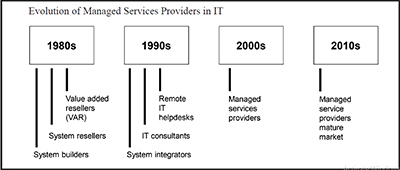 While various business functions beyond IT have already embraced managed services, the adoption has primarily centered around the ‘people function’ of the business, such as accounting, customer service, etc. Due to the lack of technology dependency, there have been limited areas where the direct involvement of the CIOs was required.
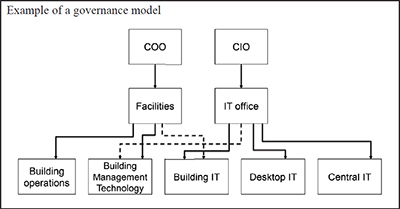
However, with the advent of AIoT-driven building operations, CIOs will need to play a much bigger role. As experienced CIOs, you are well aware of the benefits and value that managed services bring to the table. With the growing convergence of IT and operational technology, a CIO’s role is crucial to the successful adoption of AIoT in building operations.
Leveraging Managed Services for Building Operations
As a CIO, your familiarity with managed services in the IT realm will be crucial in guiding facility teams to adopt this approach for building operations. You have witnessed the evolution of managed services in IT, experienced the pain points, and discovered better ways to optimize outputs. By leveraging your expertise, you can lead your facility teams toward embracing managed services to streamline building operations and achieve sustainability goals.
 The Power of Managed Services
Historically, IoT and analytics projects have faced challenges and high failure rates. However, in 2023, the landscape has evolved. With the expertise gained from managed services in the IT realm, you can help your facility teams navigate the complexities of IoT implementation and avoid common pitfalls.
Managed services offer a way to avoid these pitfalls and achieve numerous benefits for building operations. Firstly, they enhance efficiency by leveraging AIoT, automation, and analytics to optimize energy usage, streamline maintenance processes, and identify areas for improvement. Real-time data and insights enable proactive decision-making, leading to more sustainable operations.
By collaborating with managed services providers (MSP), you can digitally transform building operations. You gain access to their deep knowledge and experience in building systems, data analytics, and automation technologies. They can guide you through the landscape, helping you select the right AIoT devices and sensors, design scalable architectures, and implement robust data management strategies. With their expertise, you can avoid common pitfalls and ensure the smooth and successful implementation of AIoT technologies.
For example, a leading retailer with over 2,000 stores in North America partnered with an MSP to digitally transform their building operations in 2013, integrating AIoT technology to monitor energy usage, HVAC systems, and lighting. Over the course of the last 10 years, they have digitally transformed their building operations to be more proactive by leveraging predictive insights from AI and automation enabled by IoT. In the same period, they have been able to increase savings per year, from less than 5 percent in the first year of the engagement to over 24 percent in the 10th year. This illustrates how the value delivered by the services also increased year on year. The service provider also delivered additional services in maintenance cost optimization and temperature compliance monitoring, allowing the retailer to achieve its business goals while making building operations more sustainable.
Meeting Building Operations Teams’ Concerns
Operations teams, particularly facility managers, may have concerns when it comes to adopting managed services. Common questions include whether the transition will disrupt current operations, if they will maintain control over their building operations, and if managed services are suitable for their specific industry or building type. It’s essential to address these concerns and provide reassurance. Managed Services are designed to seamlessly integrate with existing infrastructure, ensuring minimal disruption and a smooth transition. Facility managers retain control while gaining real-time insights and the ability to make informed decisions to enhance building operations. Capable MSPs offer customizable solutions tailored to the unique requirements of various industries and building types.
Conclusion
For CIOs overseeing companies with multiple building operations, where the digital transformation of building operations is afoot, embracing the managed services model can be crucial to success. Instead of leveraging point solutions in the market and then trying to integrate them in-house, CIOs can leverage the expertise of MSPs to realize the true potential of the selected technologies. The providers will deploy, manage, and optimize the solution to meet the organizations’ goals.
By leveraging your expertise, you can guide the way for your organization to optimize energy usage, streamline maintenance processes, and reduce emissions. Help your organization embrace the power of managed services for building operations and pave the way for a more sustainable future.
The articles from these contributors are based on their personal expertise and viewpoints, and do not necessarily reflect the opinions of their employers or affiliated organizations.
EDITOR'S Choice

Fortune Brands Innovations [NYSE: FBIN]
By Juan Guerrero, Director, IT Audit & Data Analytics
The IT Audit Evolution: From Compliance to Strategic Intelligence
Broad River Retail
Wes Dudley, Senior Vice President, Customer Experience
Customer Experience in the Age of Amplified Complexity
Fortune Brands Innovations [NYSE: FBIN]
Scott Barnes, Sr. Director of Enterprise Cyber Security (CISO)
The X-Factor in Cybersecurity: AI and Automation at Work

LHarris Technologies [NYSE: LHX]
Brian Allred, Director of Business Intelligence and Analytics
The Shift from Rigid Dashboards to Conversational Analytics
Ivar's Restaurants
Patrick Yearout, Director of Innovation, Recruitment & Training
From Hiring to Development: Nurturing Teams that Care