-
Technology
-
Industry
-
Solutions
-
- ASSET MANAGEMENT
- CUSTOMER EXPERIENCE MANAGEMENT
- CYBER SECURITY
- DATA CENTER
- DOCUMENT MANAGEMENT
- ELECTRONIC DATA INTERCHANGE
- ENTERPRISE DATA MANAGEMENT
- ENTERPRISE RESOURCE PLANNING
- ENTERPRISE RISK MANAGEMENT
- ENTERPRISE-GRADE WEB DATA SOLUTIONS
- FACILITY MANAGEMENT
- FIELD SERVICE
- IDENTITY AND ACCESS MANAGEMENT
- INFRASTRUCTURE
- IT SERVICE MANAGEMENT
- MANAGED IT SERVICES
- PAYMENT AND CARD
- PROJECT MANAGEMENT
- SOFTWARE TESTING
- STORAGE
- VIDEO SOLUTIONS
- WORKFLOW
-
-
Platforms
-
Functions
- Leadership Perspectives
- Innovation Insights
- Research
- Magazines
- News
- CXO Awards


Contributory Virtus Investment Partners on the invitation from our Editorial

AECOM
Daniel J. Levy, P.G., Vice President -Environment/ National Director, AlgaeReimagining Wastewater for a Regenerative Economy
Daniel J. Levy, P.G., Vice President -Environment/ National Director, Algae
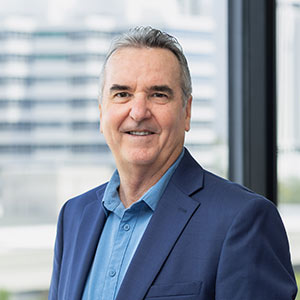
Daniel J. Levy, PG, Vice President at AECOM, is a geologist with 35+ years in algae harvesting, nutrient recovery, and renewable fuels. In addition to his work at AECOM, he founded BlueCycle Technologies to advance patented solutions that transform waste into clean water, sustainable fertilizers, and carbon-neutral energy worldwide.
In an exclusive interview with CIOReview, Levy shared how his BlueCycle framework reimagines waste as a resource to support a regenerative economy.
As a geologist, I learned to see Earth as dynamic and interconnected. Every flush eventually returns to the environment. Biosolids from wastewater still fertilize farmland, and with 8 billion people, nutrients from human and agricultural waste are overwhelming waterways. Combined with warming, this drives harmful algal blooms (HABs) that can kill pets, wildlife, and threaten human health. A once-valuable nutrient resource has become a global disposal problem. Unless we close these loops, we all share the consequences.
The BlueCycle framework offers a solution: work with nature. By harvesting algae and using hydrothermal liquefaction (HTL), we can recover nutrients, return clean water, and create carbonneutral biocrude nearly identical to fossil oil.
“HTL lets us do in minutes what nature takes millions of years—turning waste into fuel and value.”
The “do nothing” approach fuels disaster. Nutrients from wastewater and farms overload waterways, driving harmful algal blooms (HABs). When blooms die, they emit methane and recycle nutrients, creating a relentless cycle.
 The future belongs to professionals who can connect the dots between water, carbon, and energy.
SEDCUT dredging and Hydronucleation Flotation break this loop by removing sediments and algae before pollution escalates.
The greater shift is reimagining wastewater plants. Instead of century-old disposal methods, the BlueCycle framework with hydrothermal liquefaction (HTL) turns organic waste into carbonneutral biocrude for aviation, marine fuel, and biodiesel—while recovering nutrients and producing clean water.
Wastewater facilities can become future power plants, transforming waste into valuable resources.
“Today, nutrients are pouring into our waterways. By redefining wastewater treatment, we can finally turn off the faucet and transform waste into clean water, renewable fuel, and sustainable products.”
The challenge is scale. The science works—the hurdle is aligning regulation, funding, and public support. The nutrient crisis is systemic; quick fixes won’t work. We must work with nature, not against her.
The BlueCycle framework meets this need, combining algae systems with HTL to turn pollution into prosperity.
Florida leads the way. The state’s Department of Environmental Protection has boldly advanced technologies to tackle HABs and biosolids, earning broad support to expand these innovations.
“Florida is proving that an environmental crisis can become an engine for innovation.”
I balance by staying close enough to the science to understand its potential, but high-level enough to translate that science into strategy. I still review process diagrams and nutrient balances, but I also spend time with entrepreneurs, policymakers, and community leaders to build partnerships that move projects forward.
I thrive in collaborative environments, working with different disciplines to find solutions. And I absolutely thrive in the gray areas—when no clear solution exists. That’s where innovation happens, and that’s when I’m at my best.
“The future belongs to professionals who can connect the dots between water, carbon, and energy.”
Never stop learning and sharpening your technical skills—there’s no time to rest on laurels in this field. To make real change, everyone needs to roll up their sleeves and dig in. Work across disciplines, seek collaboration, and don’t shy away from uncertainty.
Most importantly, learn to reframe the problem. Instead of asking, “How do we get rid of this waste?” ask, “How do we harness it as a resource?” That’s how BlueCycle and our “Flushto-Fuel” campaign were born. Biosolids, once destined for disposal, are now feedstock for renewable fuels, fertilizers, and bio-based products.
“If we get it right, algae and biosolids could power the 21st century the way oil powered the 20th.”
This isn’t just a U.S. challenge—it’s global. From Europe to Asia to Africa, biosolids and livestock waste are piling up, contaminated and costly to manage. Land application is shrinking, disposal costs are rising, and climate impacts are escalating.
The BlueCycle framework is designed to be scalable worldwide. Whether in Florida, the Great Lakes, or the Mekong Delta, the same principles apply: close the loop, recycle nutrients, and replace fossil carbon with renewable carbon.
“Pollution doesn’t respect borders—and neither should our solutions.”
What excites me is that the future is already here. HTL transforms waste into carbon-neutral fuels in minutes, algae harvesting cleans water and captures CO2, and AI speeds innovation like never before.
Together, these advances turn waste into prosperity: wastewater plants become energy hubs, algae supply advanced materials, and biosolids fuel planes and ships. There’s never been a better time to be on Earth.
“We are building the foundation of a regenerative, 21stcentury economy.”
The articles from these contributors are based on their personal expertise and viewpoints, and do not necessarily reflect the opinions of their employers or affiliated organizations.
EDITOR'S Choice

Fortune Brands Innovations [NYSE: FBIN]
By Juan Guerrero, Director, IT Audit & Data Analytics
The IT Audit Evolution: From Compliance to Strategic Intelligence
Broad River Retail
Wes Dudley, Senior Vice President, Customer Experience
Customer Experience in the Age of Amplified Complexity
Fortune Brands Innovations [NYSE: FBIN]
Scott Barnes, Sr. Director of Enterprise Cyber Security (CISO)
The X-Factor in Cybersecurity: AI and Automation at Work

LHarris Technologies [NYSE: LHX]
Brian Allred, Director of Business Intelligence and Analytics
The Shift from Rigid Dashboards to Conversational Analytics
Ivar's Restaurants
Patrick Yearout, Director of Innovation, Recruitment & Training
From Hiring to Development: Nurturing Teams that Care


