-
Technology
-
Industry
-
Solutions
-
- ASSET MANAGEMENT
- CUSTOMER EXPERIENCE MANAGEMENT
- CYBER SECURITY
- DATA CENTER
- DOCUMENT MANAGEMENT
- ELECTRONIC DATA INTERCHANGE
- ENTERPRISE DATA MANAGEMENT
- ENTERPRISE RESOURCE PLANNING
- ENTERPRISE RISK MANAGEMENT
- ENTERPRISE-GRADE WEB DATA SOLUTIONS
- FACILITY MANAGEMENT
- FIELD SERVICE
- IDENTITY AND ACCESS MANAGEMENT
- INFRASTRUCTURE
- IT SERVICE MANAGEMENT
- MANAGED IT SERVICES
- PAYMENT AND CARD
- PROJECT MANAGEMENT
- SOFTWARE TESTING
- STORAGE
- VIDEO SOLUTIONS
- WORKFLOW
-
-
Platforms
-
Functions
- Leadership Perspectives
- Innovation Insights
- Research
- Magazines
- News
- CXO Awards







Contributory Virtus Investment Partners on the invitation from our Editorial

Zappos Family of Companies
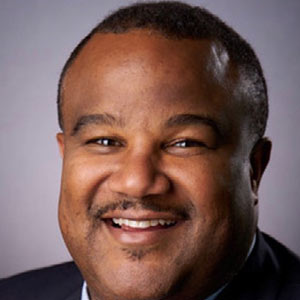
Nerrick L. Jackson, Director of Supply Chain OperationsThe Dei Of Supply Chain Management
Nerrick L. Jackson, Director of Supply Chain Operations
Diversity, equity, and inclusion (DEI) --these 3 letters are music to my ears. It’s refreshing to see the manifestation of sincere inclusion in the cultural realm of most industries. Corporations and organizations are not only acknowledging the benefits of DEI efforts, but they are embracing the DEI philosophy as a key component to doing business successfully. Organizations with a true and authentic DEI culture are 35 percent more successful than their competitors. Diverse leadership teams lead to 19 percent more revenue and decision-making is 87 percent more effective. Diversity, equity, and inclusion are indeed beneficial and for that, I am truly grateful. And while I am excited about the strides being taken to make the “traditional” acronym of DEI initiatives sustainable, for the sake of this article, allow me to change the meaning of DEI.
DEI in the supply chain world stands for demand, efficiency, and innovation. The supply chain bottleneck that nearly brought us to our knees reminded us of ever-growing consumer demands. Whether the task was delivering vaccines, masks, and needles to those battling the COVID-19 pandemic or delivering everyday household supplies such as dishwashing liquid, toilet paper, and laundry detergent, the demand for those items grew. The growth was due to consumer uncertainty about when those items would be made available and at what frequency would their local stores stock those items. As the pandemic grew, the medical world could not afford to be in a more vulnerable state. Therefore, the intensity to push supplies through the supply chain became the norm. This strained and stretched the supply chain to epic levels. Even when prices for those items spiked 100 to 200 percent above the normal asking price, the laws of supply and demand didn’t waver. The demand was greater than the supply. Supply and demand always have been and always will be the foundation of our supply chain. The economic laws of supply and demand are part of the toolbox that enables supply chain leaders to forecast demand for every good/product imaginable. Demand rules the day. The ability to use relevant data is essential for accurate demand forecasting. The more accurate the forecast, the less cost impact on the supply chain. But what do you do when you have the numbers but not the means to meet those numbers? You have the playbook but can’t run any of the plays because the rules have changed. New plays are needed and those strategies would be temporal as a ramp-down was eminent due to brick-and-mortar businesses reopening. This would impact the e-commerce boom that was rooted in an abnormal supply chain year. The lesson learned by leaders as it relates to demand is the power of pivoting. Demand can only be met when assumptions are made with supporting data that at some point a pivot will be necessary. This brings us to the “E” in the supply chain DEI.
 DEI in the supply chain world stands for demand, efficiency, and innovation. The supply chain bottleneck that nearly brought us to our knees reminded us of ever-growing consumer demands
If supply and demand are the foundation of the supply chain, efficiency is the cornerstone. Supply chain costs are at an all-time high. Now more than ever to meet consumer demand, organizations are challenged to do so efficiently. Out-of-the-box solutions are being introduced to the market daily. And it’s not enough for those solutions to be cost-effective. There’s a fine line between passing these costs onto the consumer and absorbing those costs so as not to negatively impact the overall customer experience. Therefore, supply chain leaders must seek out ways to be efficient without compromising the core values of their existence. Achieving supply chain efficiency is relatively simple. Taichi Ohno, who is considered the father of Lean, stated that “costs do not exist to be calculated, rather, costs exist to be reduced.” Therefore, being efficient requires being relentless in seeking out answers to a supply chain that has endless questions. I often quote to my team the words of rapper and entrepreneur Fat Joe which is, “yesterday’s price is not today’s price.” The stakes are higher. Demand continues to grow. The economic climate is trending unfavorably. In order to not only survive but thrive, leaders must scrutinize their behaviors to ensure demand is met through the most efficient means possible. Increasing your company’s kaizen events and Gemba walks is time well spent. The answer to achieving increased efficiency is not only in the numbers mentioned earlier but primarily in the minds of those who touch the process daily. That is where the treasures of effective efficiency can be found. Those who are closest to the process have the answers to our “I.”
Innovation can no longer be ignored. It must be moved to the forefront. Exploring new ways of meeting demand and being efficient is found in innovation. Fundamentally, the assumption is made that no one is hired to simply do the job. The job within the job is to make the job better. This thought process is not to be sequestered to the C-suite but should apply at all levels. Being innovative is inclusive. Every voice is heard and every idea is considered. Thus, creating a culture where idea empowerment doesn’t lead to idea embarrassment is critical. The supply chain is better supported when those who operate in it are supported. We were only able to take the “pandemic punch” because we rallied together to recover. Companies regrouped and are better now than before because they were forced out of their comfort zones. Creative supply chain solutions were birthed out of need and necessity. Returns processing has changed from the usual drop off at UPS and Fed-Ex to now participating grocery stores. That’s innovation. While companies are rethinking their returns policies and manufacturers are looking for ways to produce more, innovation is the tool to help them get the job done. Whether it is systematic innovation or organizational cultural innovation, be prepared to change and accept the need to grow with a fusion of what has worked with what will work to meet supply chain needs.
The articles from these contributors are based on their personal expertise and viewpoints, and do not necessarily reflect the opinions of their employers or affiliated organizations.
EDITOR'S Choice

Fortune Brands Innovations [NYSE: FBIN]
By Juan Guerrero, Director, IT Audit & Data Analytics
The IT Audit Evolution: From Compliance to Strategic Intelligence
Broad River Retail
Wes Dudley, Senior Vice President, Customer Experience
Customer Experience in the Age of Amplified Complexity
Fortune Brands Innovations [NYSE: FBIN]
Scott Barnes, Sr. Director of Enterprise Cyber Security (CISO)
The X-Factor in Cybersecurity: AI and Automation at Work

LHarris Technologies [NYSE: LHX]
Brian Allred, Director of Business Intelligence and Analytics
The Shift from Rigid Dashboards to Conversational Analytics
Ivar's Restaurants
Patrick Yearout, Director of Innovation, Recruitment & Training
From Hiring to Development: Nurturing Teams that CareLatest Issues