-
Technology
-
Industry
-
Solutions
-
- ASSET MANAGEMENT
- CUSTOMER EXPERIENCE MANAGEMENT
- CYBER SECURITY
- DATA CENTER
- DOCUMENT MANAGEMENT
- ELECTRONIC DATA INTERCHANGE
- ENTERPRISE DATA MANAGEMENT
- ENTERPRISE RESOURCE PLANNING
- ENTERPRISE RISK MANAGEMENT
- ENTERPRISE-GRADE WEB DATA SOLUTIONS
- FACILITY MANAGEMENT
- FIELD SERVICE
- IDENTITY AND ACCESS MANAGEMENT
- INFRASTRUCTURE
- IT SERVICE MANAGEMENT
- MANAGED IT SERVICES
- PAYMENT AND CARD
- PROJECT MANAGEMENT
- SOFTWARE TESTING
- STORAGE
- VIDEO SOLUTIONS
- WORKFLOW
-
-
Platforms
-
Functions
- Leadership Perspectives
- Innovation Insights
- Research
- Magazines
- News
- CXO Awards











Contributory Virtus Investment Partners on the invitation from our Editorial

University of Rochester Medical Center
Gregg Nicandri, Chief Medical Information OfficerThe Role of Digitization in Healthcare
Gregg Nicandri, Chief Medical Information Officer
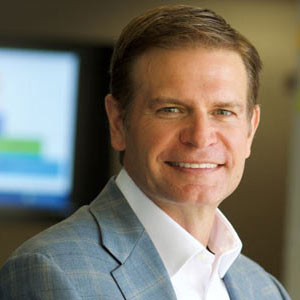
As Chief Medical Information Officer at the University of Rochester Medical Center, Gregg Nicandri leads a team of workflow engineers at the intersection of patient experience, provider experience, data/analytics, and value. He and his team seek to transform their eight-hospital learning health system where providers, caregivers, and patients type and click data into an electronic health record and other databases, to a SMART health system, where they strategically leverage technology to automate much of the data and insight generation, enabling them to deliver truly personalized healthcare experiences.
What are some of the current trends that are prevailing in the healthcare sector?
The Healthcare industry is trying to adapt to digital transformation like every other industry. Our digital strategy led by our Chief Digital Officer Michael Hasselberg, has three phases: Access, Engagement, and Value.
We initially began our digital strategy by concentrating on patient access; making it easier for patients find the right provider and to have a frictionless experience when scheduling appointments. By using a chatbot on our patient facing site, we were able to better understand the terms that patients were using to find care, and have upgraded our search engine to facilitate those searches. Now, once they find a provider, it's also easy for them to schedule online. The patient is able to check-in from home rather than having to come to the office, saving 15 minutes in the office that would otherwise be spent filling out paperwork thanks to our electronic check-in procedures. Additionally, patients now have choice regarding how they want to be seen, with the option of scheduling in-person visits, telemedicine visits, telephone consultations, asynchronous e-visits, and other appointment types.
We are currently in the engagement phase of our strategy. This entails enabling technology that enables us to become more connected with our patients when they are outside of the hospital and clinic. By doing this, we gain an understanding of them on a more individual and personal level and can provide, better, more equitable care that suits the individual needs of the patient. This level of engagement often involves patient facing apps. Historically these have been point solutions and the work of incorporating each of these tools into our EHR was prohibitive. As a result, we've collaborated with a vendor that serves as a power strip for our electronic health record, facilitating these complex connections. This enables us to easily connect patients with apps for care pathway’s, remote patient monitoring, ride-share integrations, digital therapeutics, and more.
Value is the final component of our strategy. The foundational components of access and engagement have resulted in significant increases in the volume, quality, types, and utility of patient related data and information. This will allow us to incorporate decision support tools based on predictive algorithms that lead to improved patient outcomes.
How are you utilizing the data that the implementation of these technologies has provided?
Even though we're scientists who practice in an academic medical center, we still make a lot of our decisions based on emotion. To be a successful organization long-term, you have to deal with the urgent, but also make sure you do not lose sight or under-resource the important. At this point, we've got so much data that it is not really important to get more data and I’m not as interested in new technology that just yields more data. We need the data we have to be high quality and we need to make sure we're asking the right questions and solving the right problems so that it drives the highest impact for our organization.
That is why we have started aggregating all of our strategically important data into a virtual data warehouse. This enables us to clearly understand our organizational key results and the levers that move them in the right direction. We spend less time arguing over definitions and where the data came from and more time identifying locations or services with unwarranted variability, targeting the areas for improvement, and tracking the results of interventions. Historically we would target efforts where there was interest or funding, now we are now able to strategically focus on areas with the biggest opportunity for improvement and maximize impact.
What are some of the current issues that the medical technology industry faces?
I think that one of the biggest challenges for the medical technology industry is to make technology that is actually usable by providers and patients. You can develop an app that demonstrably improves outcomes but if it requires clinicians to significantly disrupt their workflow, and patients to need training or specific education, it just won’t be used. Interoperability with healthcare system EHR’s is a must.
Second, I think there is a bit of a mis-conception that technology tools utilized in other industries can be directly applied to healthcare. The fundamental issue is that compared to these other industries (manufacturing, or banking for example), the quality of healthcare data is extremely poor. I think this presents significant opportunity for improvement. Data generation currently is done by providers, nurses, and patients by pointing and clicking data into an EHR and the remainder is often in un-structured text. Automating and standardizing healthcare data collection utilizing Optical Intelligence, Ambient Voice, Natural Language Processing technology and others has significant potential in improving patient outcome and provider and patient experience.
Lastly, Artificial Intelligence and clinical decisions support algorithms are heavily promoted right now, but very few have led to significant improvement in patient outcomes because they are not used. Trust and transparence in the tools are what will drive provider engagement. If the maps app in your car took you to the wrong location 80 out of 100 times would you use it? Right now, alerts based on algorithms in our health record, fire 20 to 30 times on normal patients before identifying an abnormal patient and the front-line clinician has no idea what the model is based on. When a patient’s life is on the line, this is just not acceptable.
What would be your one piece of advice for new professionals in the healthcare industry?
To deliver the best patient outcomes, provider, and patient experience in healthcare today, health systems need to become adept at adopting and employing cutting edge technology, and technology companies must be creating and configuring technology that solves meaningful problems. This requires partnership between industry and front-line clinicians and a re-design of technology education within health systems. Due to the rapid evolution of technology it is no longer effective to train once when onboarding providers. Technology related education needs to be a consistent part of medical training and faculty professional development. I would encourage new professionals in healthcare or medical technology to reach out and connect on solving these problems together. It is challenging, fun, and rewarding, and it is likely you will change some lives for the better along the way.
The articles from these contributors are based on their personal expertise and viewpoints, and do not necessarily reflect the opinions of their employers or affiliated organizations.
EDITOR'S Choice

Fortune Brands Innovations [NYSE: FBIN]
By Juan Guerrero, Director, IT Audit & Data Analytics
The IT Audit Evolution: From Compliance to Strategic Intelligence
Broad River Retail
Wes Dudley, Senior Vice President, Customer Experience
Customer Experience in the Age of Amplified Complexity
Fortune Brands Innovations [NYSE: FBIN]
Scott Barnes, Sr. Director of Enterprise Cyber Security (CISO)
The X-Factor in Cybersecurity: AI and Automation at Work

LHarris Technologies [NYSE: LHX]
Brian Allred, Director of Business Intelligence and Analytics
The Shift from Rigid Dashboards to Conversational Analytics
Ivar's Restaurants
Patrick Yearout, Director of Innovation, Recruitment & Training
From Hiring to Development: Nurturing Teams that Care