-
Technology
-
Industry
-
Solutions
-
- ASSET MANAGEMENT
- CUSTOMER EXPERIENCE MANAGEMENT
- CYBER SECURITY
- DATA CENTER
- DOCUMENT MANAGEMENT
- ELECTRONIC DATA INTERCHANGE
- ENTERPRISE DATA MANAGEMENT
- ENTERPRISE RESOURCE PLANNING
- ENTERPRISE RISK MANAGEMENT
- ENTERPRISE-GRADE WEB DATA SOLUTIONS
- FACILITY MANAGEMENT
- FIELD SERVICE
- IDENTITY AND ACCESS MANAGEMENT
- INFRASTRUCTURE
- IT SERVICE MANAGEMENT
- MANAGED IT SERVICES
- PAYMENT AND CARD
- PROJECT MANAGEMENT
- SOFTWARE TESTING
- STORAGE
- VIDEO SOLUTIONS
- WORKFLOW
-
-
Platforms
-
Functions
- Leadership Perspectives
- Innovation Insights
- Research
- Magazines
- News
- CXO Awards


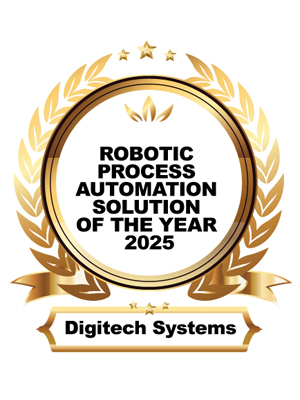
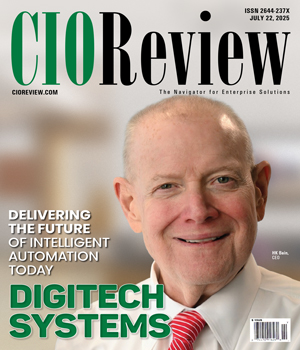
In a world where digital transformation can feel like an endless chase—one solution after another promising relief but delivering complexity—Digitech Systems stands apart by offering something different: simplicity with substance. For more than 28 years, the Greenwood Village, Colorado-based company has reimagined how enterprises approach automation, document management, and artificial intelligence. Founded in 1997 by Scott Matthews, Digitech Systems has grown into a technology partner of choice for thousands of organizations in sectors such as healthcare, education, finance, human resources, and government. The secret? A relentless focus on usability, flexibility, and delivering tangible value. Modular Microservices Architecture At the heart of Digitech Systems’ product suite is Sys.tm®, a revolutionary enterprise platform designed to unify automation and information management in a single, intuitive environment. While many automation tools rely on rigid frameworks, Sys.tm is built on a modular microservices architecture that allows users to activate only the features they need. That means no overpaying for unused capabilities and no time wasted toggling between systems. It’s a comprehensive platform—but one that scales up or down based on actual needs. The genius of Sys.tm lies in its flexibility. It includes a wide array of automation services such as Sys.tm® Automations for robotic process automation (RPA), Sys.tm® Flows for business process automation, and Sys.tm® Intelligence, which combines document and text recognition with cutting-edge generative AI. These services can be turned on or off as needed, delivering value without bloated costs. More importantly, they can be embedded directly into workflow processes, so users don’t need to switch between applications to complete tasks.
Digital Magazine
Top Real Time Speech Understanding Platform 2025
At the heart of commerce lies conversation, and at the heart of conversation are people—each bringing their own distinct way of thinking, speaking, problem-solving, and expressing themselves. These differences, shaped by accent, culture, background, and emotion, add color and richness to global businesses, making them more dynamic, more human, and full of potential. But those same differences can also lead to misunderstandings and friction, trigger bias, and cause customers to focus on subjective attributes—like how something is said—rather than on what is being said. What should be a moment of connection often turns into confusion, resulting in hesitation and weakened customer relationships. Even with significant investments in technology, these issues persist. Audio lag, muffled voices, unfamiliar speech patterns, and accent-related misunderstandings all stand in the way of clarity. They diminish empathy, delay resolution, and make it harder for customers and service agents to feel truly heard or understood. That’s where Sanas makes a difference. As a next-generation speech understanding and intelligence technology company, Sanas has invented a speech engine that removes barriers and restores clarity in real-time conversations. Its technology seamlessly eliminates background noise and competing voices while also translating accents in real time—ensuring every word is not only heard clearly but also understood effortlessly. The result is an experience that feels like a studio-quality conversation, no matter who’s speaking or where they’re calling from. For global teams who rely on every call, this makes all the difference. Thanks to Sanas, jobs that were once out of reach for many individuals are now within grasp. Enterprises and business process outsourcers can now confidently “hire for talent, not accent.” “Miscommunication is the hidden enemy of great customer service. Our mission is to eliminate that friction, making every interaction clear, confident, and meaningful—because when voices are heard, solutions follow,” says Sharath Keshava, CEO and co-founder.

Top Automated Visitor Management Solutions 2025

Options for managing the front desk for buildings have traditionally been very limited. A friendly face, a sign-in sheet, maybe a landline. Visitors waited, and security was often just a handshake and a sticker badge. It worked for a time, but those days are over. As buildings grow smarter and expectations rise, the front desk is no longer just a greeting point. It is where security starts, efficiency is tested, and impressions are made. For organizations managing headquarters, government sites, or anything in between, the challenge is balancing control with a smooth, professional experience. That is where ALICE Receptionist steps in. Rather than acting like a cold screen or clunky chatbot, ALICE is a full visitor management platform built for modern spaces. It verifies who is coming in, connects guests with hosts, and enforces protocols quietly and efficiently. Everything runs in the background, keeping buildings secure and welcoming. “ALICE Receptionist serves as a scalable alternative to traditional reception staffing, allowing clients to reallocate human resources toward higher-value responsibilities,” says Mike Yoder, CEO of ALICE Receptionist. Three Problems, One Simple Fix Organizations do not turn to ALICE just to upgrade technology. The decision often starts with three familiar challenges: improving security, simplifying check-ins, and using staff time more wisely. Security is often the first concern. Unattended lobbies and open entrances carry real risks, and full-time staffing at every location is not always practical. ALICE helps by securing access points without requiring someone physically at the desk. Visitors are guided through check-in, which may include scanning IDs, checking watch lists, and capturing essential information. The process ensures only approved individuals enter, while detailed logs support auditing and compliance.
Most Promising MS Dynamics Solutions Provider 2025
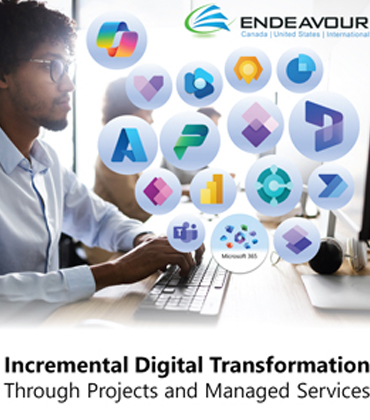
Endeavour Solutions, a trusted Microsoft partner, is a living testament to growth earned through experience and driven by impact. After years of empowering small and mid-sized businesses with Microsoft CRM, ERP and Cloud solutions, the company has evolved with purpose in the Enterprise space. By leveraging its deep Microsoft Business Applications expertise, it has confidently stepped into serving large enterprise clients, leading incremental digital transformation across the United States and Canada, following a model of support, enhancement projects, and managed services via a new website and brand called D365 Support North www.d365supportnorth.com. “Our transition is not a departure from our origins, but a natural evolution shaped by years of growth, strategic acquisitions, and a relentless focus on client success,” says Madhu Vajpey, CEO, Endeavour Solutions. “Having built a strong foundation in the mid-market, we are now extending our proven methodologies and best practices into more complex, large-scale environments.” Today, Endeavour empowers organizations to drive incremental large-scale innovation by harnessing the full potential of Dynamics 365 Finance & Operations including the latest advancements in Microsoft’s AI, Power Platform, and cloud technologies. Its transition into a full-spectrum Microsoft solutions provider has enabled it to support enterprise-grade workloads across ERP, CRM, AI, and beyond. With more than 1,100 active clients, the company combines enhancement projects and premium Managed Services with flexible service-level agreements (SLAs) tailored to meet complex client needs.
Top No-Code Development Platform 2025

Contract initiation and review is a team sport often involving procurement, legal, finance, and operations, each bringing their own priorities and checkpoints. Coordinating that input is essential for businesses to ensure every agreement is vetted through multiple layers of review and approval, making automation a complex challenge. Too often, the automation tools in place are system-centric, with platforms dictating the process rather than adapting to how teams actually work. This creates a rigid, inefficient setup that sacrifices both flexibility and experience. Neota stands out by doing the opposite. The company focuses on user-centricity instead of system-centricity. Not confining businesses to static digital processes empowers them to digitize and automate their existing workflows, making them as specific as needed. “Our platform’s strength lies in our ability to support processes exactly as they exist, not how software vendors think they should be,” says Julian Uebergang, CEO. Neota is a no-code platform built to deliver bespoke digital solutions. More than just an app-building tool, the platform enables organizations to transform fragmented, manual processes into cohesive, efficient systems tailored to their actual operations. Such flexibility proves essential for entities in high-compliance domains like legal, insurance, procurement, risk and HR, where even a single misstep can lead to serious consequences. The company combines a visual design environment with deep process mapping capabilities. Users begin by visually laying out their workflows step by step, then build on that foundation by integrating tools they already use, such as document management systems, e-signature platforms and payment gateways. This approach lets companies preserve their current tech stack while supercharging their business operations and workflows through automation.
CXO INSIGHTS

The Citizen Developer: Low Code Application Development And The New It Organization
Peter Young, IT Director, Enterprise Architecture and Platforms, Granite Construction

Embracing the Evaluation of Emerging Technologies
Tina Lampe, Director - IT Software Engineering, DIRECTV

Unraveling The Dynamics Of Commercial Real Estate: Navigating A Changing Landscape
Dylan Sproul, Vice President, Capital Markets & Investment Sales, Transwestern

Rethinking Customer Experience in the Digital Age
Jim Mason, Vice President of Customer and IT Systems Support, Little Caesars Pizza

From RPA to Intelligent Automation & Beyond
JP Raffenot, VP, Information Technology, Genworth


IN FOCUS
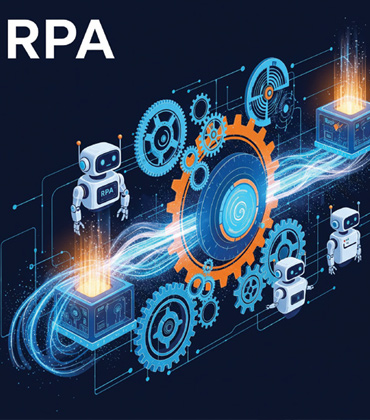
Reimagining Efficiency: Rise of Robotic Process Automation in Modern Business
Robotic process automation boosts operational efficiency by automating repetitive tasks, reducing costs, and enabling human workers to focus on more strategic and value-driven activities. As enterprises navigate through digital transformation, automation offers a gateway to agility without the disruption of replacing legacy systems. Robotic Process Automation (RPA) is a strategic enabler for businesses seeking speed, accuracy, and scalability in an increasingly digital and competitive environment. RPA helps organizations reduce costs, eliminate human error, and reallocate workforce efforts toward higher-value activities by automating rule-based, repetitive tasks across various functions, such as finance, HR, customer service, and IT. Its impact is being felt across sectors from banking and insurance to healthcare and manufacturing. As organizations become more data-driven and agile, RPA becomes a key enabler in achieving digital transformation goals without massive overhauls.
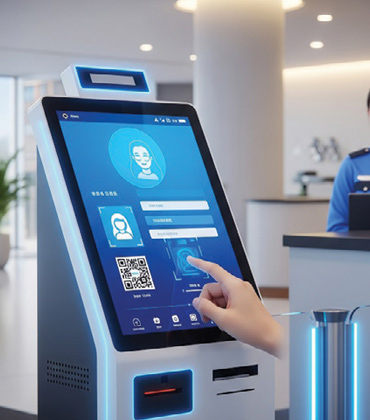
Changing Front Offices: Smart Visitor Systems
Automated visitor management systems enhance efficiency, security, and professionalism by streamlining check-in and improving data collection. They transform the visitor experience and organizational operations. Visitor management systems within organizations have undergone significant advancements in recent years, emphasizing efficiency and security. Traditionally, visitor management relied on handwritten logs, paper badges, and extensive waiting periods at reception desks. However, the advent of automated visitor management solutions has revolutionized the processes of hosting, tracking, and managing guests, thereby enhancing operational efficiency, security measures, and the overall professionalism of the organization. These systems have redefined the initial point of contact between institutions and external visitors, facilitating a seamless experience that guests and staff appreciate.
EDITORIAL
Tools Driving Digital Transformation
Today, digital transformation is about making everyday operations smarter, faster, and more adaptable. Three key tools driving this shift are Automated Visitor Management Solutions, No-Code Development Platforms, and Real-Time Speech Understanding Platforms.
Continue ReadingAutomated Visitor Management Solutions replace paper sign-in sheets with efficient, secure check-ins, badge printing, and visitor tracking. They improve compliance and safety while creating a smooth first impression for clients, partners, and employees.
Supporting this agility, No-Code Development Platforms empower teams to build and adjust visitor workflows quickly, without relying on developers for every change. Need to update a check-in form for a new policy or integrate visitor data with your CRM? No-code tools enable you to accomplish tasks in hours, not weeks, aligning technology with fast-moving business needs.
Additionally, Real-Time Speech Understanding Platforms integrate voice-based interactions into your workplace. Visitors can check in using voice commands, employees can instantly transcribe meetings, and conversations can be converted into actionable data for compliance or customer insights. This reduces manual tasks and improves accessibility.
Together, these technologies form a practical ecosystem for modern enterprises. Visitors experience a seamless, tech-enabled welcome. Teams gain flexibility to refine processes through no-code tools. Voice technology reduces friction while capturing valuable information in real time.
This approach is not about adopting technology for its own sake; it’s about creating a secure, efficient, and adaptable workplace. By combining automated visitor management, no-code flexibility, and real-time speech capabilities, organizations can move closer to a digital environment that supports growth and delivers a better experience for everyone.
In this edition, we are spotlighting top companies that deliver automated visitor management, no-code development, and real-time speech solutions, redefining the modern workplace. These insights will support your strategic planning as you continue to lead your organization's digital transformation journey.
